
Alignment Turns Creative Velocity into Sustainable Growth

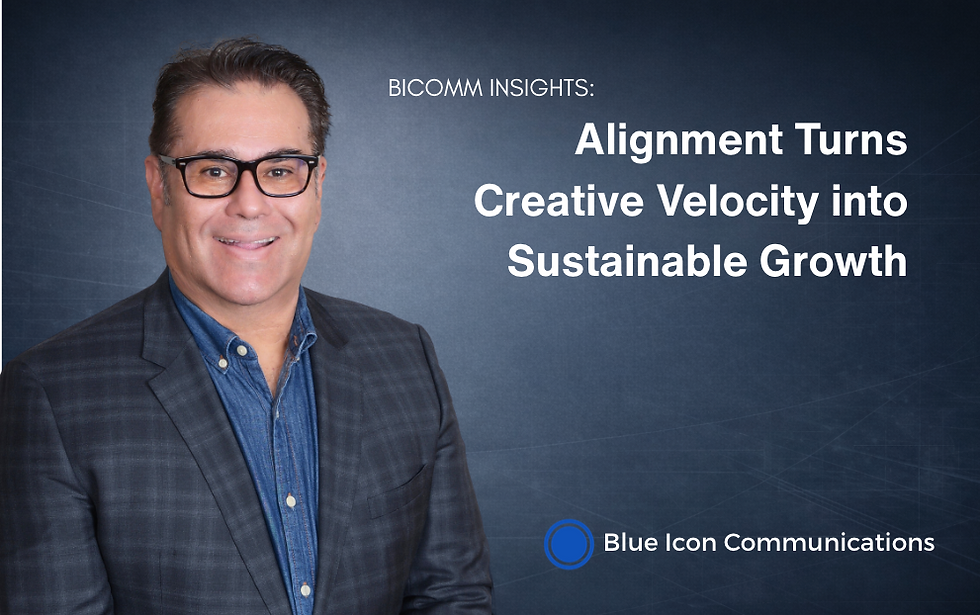
Before I became an entrepreneur, I worked for a decade as an executive in various levels of legislative government in the greater Los Angeles area. In a region known for its scale, diversity, and political complexity, I had influence, responsibility, and the opportunity to design programs and initiatives that advanced innovation.
And when I was given space to create, I thrived.
I could see inefficiencies quickly. I could connect departments that weren’t communicating. I could identify where messaging was misaligned and where systems were slowing progress. I enjoyed solving complex problems under pressure. At the same time, I helped create policy and engaged with stakeholders. Working for the legislature, I also moved seamlessly between policy and politics, organizing initiatives and running campaigns as needed.
But the environment itself felt suffocating.
An 8 a.m. to 5 p.m. routine inside a fixed office. Layers of approval. Long decision cycles. Bureaucratic inertia. Meetings about meetings. A culture that often rewarded comfort over progress.
For some, that structure provides stability–For me, it felt like friction.
It wasn’t a lack of discipline, and it wasn’t a lack of capability. There was a misalignment between how I think and how the system operated within government. I wanted momentum where there was a delay. Iteration where there was a procedure. Progress where there was comfort.
At the time, I didn’t have language for that tension. I did not want to understand bureaucracy; to me, it was inefficient, slow, and dull.
Years later, when my son began struggling in traditional classroom settings, everything started to make sense.
He is highly intelligent — a GATE student — yet the rigidity of a traditional classroom created conflict. After his ADHD diagnosis, we began to understand something important: he wasn’t deficient. He was wired differently. Gifted, but requiring the right structure to support how his brain processes information.
In learning about him, I learned about myself. I realized I had gone most of my life undiagnosed with ADHD. Suddenly, my career path made sense.
Why I excelled in environments that required innovation, rapid problem-solving, and strategic thinking.
Why I struggled in rigid systems that valued routine over progress.
Why I could deep dive into complexity and connect patterns quickly, which generated innovative programs and policies.
Why I thrived under pressure but suffocated in stagnation.
It wasn’t an inconsistency. It was my wiring. That realization reframed entrepreneurship for me, and it has kept me focused.
Starting my own agency wasn’t just an ambition. It was a natural alignment. I am a fourth-generation entrepreneur, so it makes sense.
Today, I’m happy running my marketing agency. The freedom, the flexibility, and the challenges. My office is filled with art, and music flows in for everyone if needed, because it allows creative expression to breathe. The environment matters. The space matters. The ability to think freely matters.
Working across industries — private enterprise, public agencies, political campaigns — gives me what rigid systems never could: complexity. Every client brings a different challenge. Different variables. Different constraints. Navigating layered problems energizes me. I can step into an organization, assess its digital footprint, messaging, and positioning, and quickly identify misalignment.
That speed of synthesis is a strength. But I’ve learned something equally important: Creative velocity without structure becomes chaos.
The same brain that can solve problems quickly can also pivot too fast. It can chase too many directions. It can outpace the organization’s infrastructure.
Early in my career, energy created momentum. Over time, I realized systems create sustainability. Frameworks, defined processes, comprehensive diagnostics before execution, clear reporting, operational procedures, and accountability metrics. Not because I love rigidity. But because structure protects creative strength.
I don’t see ADHD as a superpower. And I don’t see it as a limitation. I see it as potential that requires understanding and support. When I understood that, everything changed. Support replaced frustration. Structure replaced conflict. Growth accelerated.
The same principle applies in entrepreneurship.
Understanding how you are wired allows you to build environments that amplify your strengths and guard against your weaknesses.
If you think fast, install systems that slow down decisions appropriately.If you generate ideas rapidly, build filters.If you dive deep into complexity, surround yourself with operational discipline.If you thrive on innovation, create structure to sustain it.
Success is not about changing how you think. It’s about designing support around how you think. For me, that meant leaving an environment that restricted my strengths — and then intentionally building one that supported them.
Entrepreneurship gave me space to innovate. Systems allowed me to sustain it.
Alignment creates clarity; clarity creates growth, and growth becomes sustainable when supported by discipline.
Understanding is the starting point, and support is what makes it successful.
Start the conversation at bicomm.us · louis@bicomm.us · 562.358.4020
About the author
Louis Reyes is the founder of Blue Icon Communications, a strategic marketing agency based in Whittier, CA, serving the Gateway Cities and greater Los Angeles County. He holds a degree in policy and management from USC and has more than 25 years of experience in marketing, communications, public affairs, and growth strategy for small and mid-sized businesses, nonprofits, government agencies, labor organizations, and political clients.


